
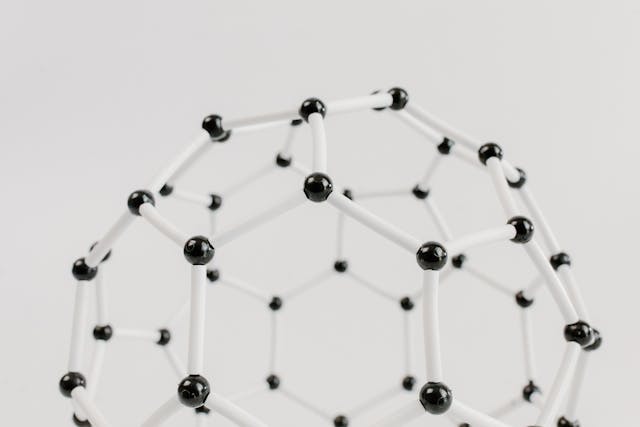
Graphene
Graphene, a single layer of carbon atoms arranged in a hexagonal pattern, possesses exceptional properties that make it highly valuable in various nanotechnology applications. Here are some of its key uses in today’s nanotechnology:
Electronics and Photonics:
-Transistors: Graphene transistors provide faster switching speeds and superior performance compared to traditional silicon transistors due to graphene’s high electron mobility.
– Sensors: Graphene’s sensitivity to environmental changes makes it perfect for creating highly sensitive sensors for detecting gases, chemicals, and biomolecules.
– Flexible Displays: Graphene’s mechanical flexibility and conductivity are utilized in developing flexible and transparent displays for smartphones, tablets, and wearable devices.
Energy Storage:
– Batteries: Graphene enhances the performance of batteries, including lithium-ion batteries, by improving charge/discharge rates and increasing capacity.
– Supercapacitors: Graphene-based supercapacitors provide higher energy density and faster charging times compared to traditional capacitors, making them ideal for applications requiring rapid energy storage and release.
Composite Materials:
– Strength and Lightweight: Graphene is integrated into polymers and other materials to create composites that are significantly stronger and lighter than traditional materials. These composites are used in aerospace, automotive, and construction industries.
– Conductive Materials: Graphene improves the electrical and thermal conductivity of composite materials, making them useful in electronics and thermal management systems.
Expose on Graphene continues below:
Biomedical Applications:
– Drug Delivery: Graphene’s large surface area and ability to functionalize with various molecules make it an excellent platform for targeted drug delivery systems.
– Tissue Engineering: Graphene-based scaffolds support cell and tissue growth, aiding in regenerative medicine and tissue engineering.
– Biosensors: Graphene’s sensitivity and conductivity are utilized in biosensors for detecting diseases, monitoring glucose levels, and other medical diagnostics.
Environmental Applications:
– Water Purification: Graphene-based filters and membranes are highly effective at removing contaminants, heavy metals, and pathogens from water, contributing to improved water purification technologies.
– Air Filtration: Graphene materials are used in air filtration systems to capture pollutants and improve air quality.
Coatings and Paints:
– Anti-Corrosion Coatings: Graphene’s impermeability to gases and liquids makes it ideal for anti-corrosion coatings on metals.
– Conductive Inks: Graphene inks are used in printed electronics, offering high conductivity and flexibility for applications in sensors, RFID tags, and flexible circuits.
Quantum Computing:
– Qubits: Graphene’s unique electronic properties are explored for creating qubits in quantum computing, potentially leading to faster and more efficient quantum computers.
In Summary:
Graphene’s unique combination of mechanical strength, electrical conductivity, thermal conductivity, and chemical stability makes it a versatile material in nanotechnology. As research and development continue, graphene is expected to play a crucial role in advancing various technological fields, from electronics and energy storage to biomedicine and environmental solutions.